

Royal blue,
from mine to finger.
Hana Nataf and David Nataf, two GIA Graduate Gemologists, go to Mogok themselves, choose the rough, oversee the cutting and set the gem for you. Only natural gems, untreated and unheated, with origin confirmed by independent laboratory reports.
9.16 ct royal blue sapphire cabochon, Bobadan mine, Mogok, our photograph (2016). Sold, not for sale.

Pigeon’s blood, from Mogok
A 10.98 ct natural ruby cabochon: medium dark, strongly purplish red, the colour known as « pigeon’s blood ». Translucent, unheated, untreated. Bought rough in Mogok in 2016, cut and sold in Tokyo.
- Weight
- 10.98 ct
- Cut
- cabochon
- Treatment
- Unheated, untreated
- Origin
- Mogok, 2016
From our 2016 record; gem graded at the GIA laboratory in Bangkok. Sold, not for sale.
- Burmese sapphire specialists
- Two GIA Graduate Gemologists (GG)
- Natural, untreated, unheated
- Verifiable certificate for every gem
◆ Every gem we sell is sourced at the mine, cut, polished and certified by us.
From mine to finger
We buy where the gems come out of the ground: at the Mogok market, beside the miners, at the cutter’s bench. Then every gem is examined by both of us, reported by an independent laboratory when it matters, and set in our Porto workshop.


Why Burmese sapphire, and what « royal blue » means
Mogok, a historic source
The Mogok gem tract, in the Mandalay Region of Myanmar (Burma), has produced sapphires and rubies for centuries. Its sapphires formed in a metamorphic geological setting, very different from the basalt-related deposits of Thailand, Cambodia or Australia.
Where the blue comes from
Blue in sapphire comes from iron and titanium present together in the corundum crystal. Sapphires from metamorphic deposits such as Mogok usually contain less iron than basalt-related sapphires, so their blue tends to be brighter and less inky. Fine rutile needles, called « silk », can scatter light and soften the colour into the velvety look the trade prizes.
« Royal blue » is a trade term
It is not a scientific grade. It describes a vivid, strongly saturated blue of medium to medium-dark tone. Some laboratories, such as SSEF, Gübelin or GRS, may add a colour term like « royal blue » to their reports, each under its own criteria. Others, such as GIA, describe colour without it. A royal blue sapphire is not necessarily Burmese, and a Burmese sapphire is not automatically royal blue.
Origin is a laboratory opinion
Laboratories determine geographic origin from inclusions, trace-element chemistry and spectroscopy. It cannot be read from a photograph, and it is not always possible: some reports say « origin undetermined ». This is why we write « Burma (Myanmar) » only when an independent report says so, with its number.
Heated or unheated
Most sapphires on the market are heated to improve their colour or clarity. It is a stable, accepted treatment, provided it is disclosed. Unheated sapphires with a fine colour are rarer and priced accordingly. We sell only unheated, untreated gems, and each piece shows what its laboratory report says.
Does origin make a gem better?
Not on its own. Colour, clarity, cut and size come first. Origin adds history and, for Burma, a long reputation that the market values. We would rather sell you a beautiful gem honestly described than a famous name.

Landscapes inside a gem
0.52 ct unheated ruby, Ballondji mine, Mogok. Our 2016 record notes a rare round included crystal visible under the microscope.


Descriptions taken from our 2016 records; gems graded at the GIA laboratory in Bangkok. These gems have been sold and are not for sale. No report numbers are published here.
Gemmology, frankly
How can you recognise a Burmese sapphire?
You cannot tell reliably by eye or from a photograph. Burmese (Mogok) sapphires are often a vivid, velvety blue, sometimes softened by fine rutile silk, but sapphires from Sri Lanka, Madagascar or Kashmir can look very similar. Geographic origin is an opinion issued by a gemmological laboratory (such as GIA, SSEF, Gübelin or GRS) from inclusions, trace-element chemistry and spectroscopy, and some reports conclude that origin is undetermined. We only write « Burma » on a gem when an independent report says so.
What is a natural inclusion?
A tiny crystal, fluid, needle or growth feature trapped inside a gem as it formed in the earth. Inclusions are a gem’s fingerprint: they help laboratories separate natural from synthetic, detect heating and form an opinion on origin. Fine rutile « silk » or a single included crystal, seen under the microscope, is part of a natural sapphire’s story; we never remove or hide them in our photographs.
What does « unheated » mean?
That a laboratory found no indications of heat treatment. Most sapphires on the market are heated, which is stable and accepted when disclosed. Unheated gems with a fine colour are rarer. Every gem we sell is unheated and untreated.
Is « royal blue » a grade?
No. It is a trade term for a vivid, strongly saturated blue of medium to medium-dark tone. Some laboratories add it to their reports according to their own criteria; GIA does not.
The journey of a gem
- Source
Rough and cut sapphire from Mogok, through miners and cutters we know.
- Cut & examine
Cutting followed by us, then identification and grading by two graduate gemmologists.
- Report & certify
Independent laboratory report for origin, plus a certificate and gem_id on carat.technology.
- Set & deliver
Set by our jewellers in our Porto workshop and delivered insured, with its passport.
Gem identification & certification: carat.technology
Every gem we sell has a passport. It carries a unique gem_id, a cryptographic fingerprint and a QR code that opens its record on carat.technology, the gem identification and certification platform we run from Zug, Switzerland.
- We examine each gem in person as graduate gemmologists.
- carat.technology issues its certificate with a unique gem_id.
- A QR code travels with the piece, in its box and on your invoice.
- The record follows the gem through cutting, setting and sale.
carat.technology identifies gems from photographs. It does not determine geographic origin: for that, we rely on independent laboratory reports.
Verify a certificate
Enter the gem_id printed on your certificate (format xxxx-xxxx-xxxx), or scan its QR code.
Opens carat.technology/verify/<gem_id> in a new tab.Pieces we have made
Real photographs of our rings and gems. Colour corrected for white balance only, never enhanced. Enlarged 2× for the web. Photos of pieces we have made; availability on request.


From wax to ring


Bought rough in Mogok, cut there, sold
Descriptions taken from our 2016 records; gems graded at the GIA laboratory in Bangkok. These gems have been sold and are not for sale. No report numbers are published here.

9.16 ct
- Gem
- Sapphire
- Colour
- royal blue
- Cut
- cabochon
- Mine
- Bobadan alluvial mine, Mogok
- Treatment
- Unheated, untreated

1.15 ct
- Gem
- Sapphire
- Colour
- cornflower blue
- Cut
- marquise
- Mine
- Painpyiet mine (Lisu Christian community), Mogok
- Treatment
- Unheated, untreated

10.98 ct
- Gem
- Ruby
- Colour
- medium dark, strongly purplish red, « pigeon’s blood », translucent
- Cut
- cabochon
- Mine
- Mogok
- Treatment
- Unheated, untreated

0.19, 0.20, 0.21 ct
- Gem
- Rubies
- Colour
- red, eye clean
- Cut
- oval, faceted by hand on traditional tools by master lapidary Pyone
- Mine
- Ballondji mine, Mogok
- Treatment
- Unheated, untreated

We go down the mine ourselves
We choose the rough, have it cut, examine it, design and make your jewel, and deliver it with an independent laboratory report.

Lava & Diamonds
Volcanic lava beads, gilded by hand with fine gold leaf in our workshop, and paired with diamonds.
Our workshop in Porto
In our Porto workshop we design and make our jewellery, and we are specialists in fine gold leaf gilding, laid by hand. The workshop is directed by Pedro Manuel Sousa e Silva.

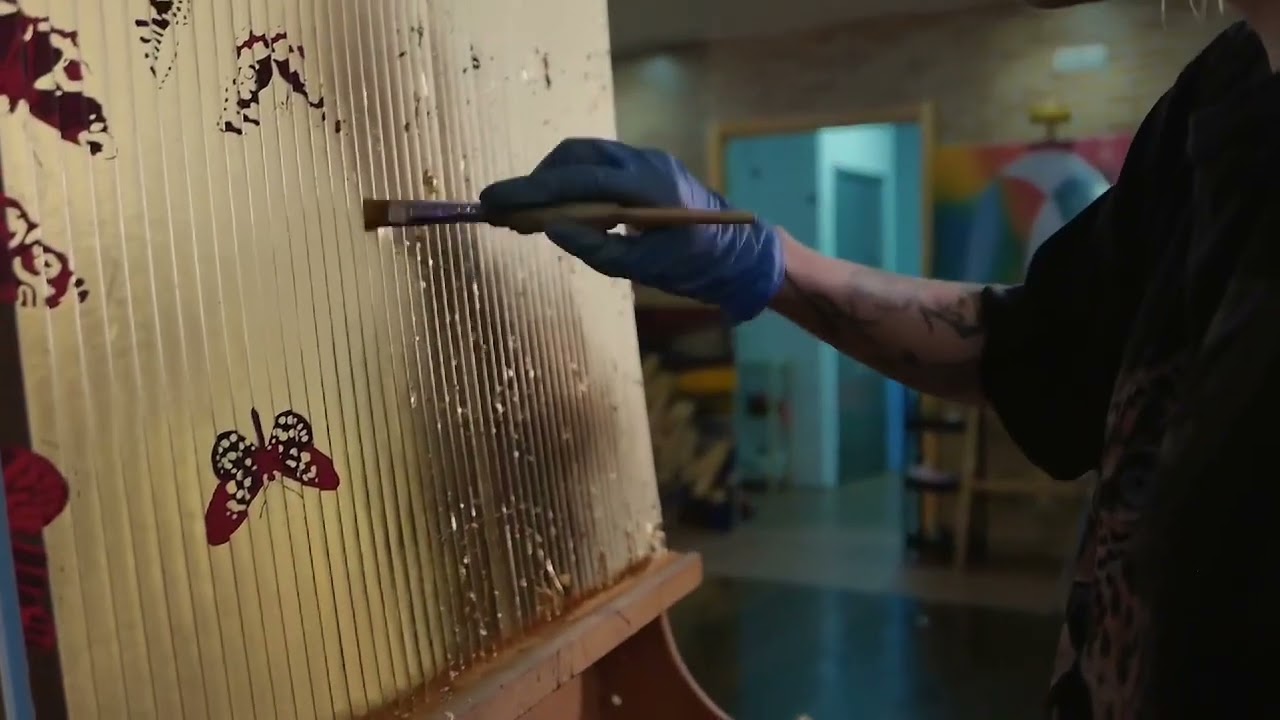
« Atelier de dorure », David Nataf, YouTube · youtu.be/kILrdkmQO2c
Fine gold leaf gilding
In our Porto workshop, gold leaf is laid by hand with a brush, on lava beads and jewellery components. A service in its own right, on quotation.
Burmese royal blue sapphire
Natural sapphires from Mogok, Burma (Myanmar), chosen for a saturated, velvety blue. Under about €1,500 you can pay in two clicks. Above that, we show you the gem on a video call first.
Our naming rule. A piece is called « Burmese » or « royal blue » only when an independent laboratory report (GIA, SSEF, Gübelin, GRS, AGL…) states it. The report number is shown on every piece; every gem we sell is unheated and untreated.
Loose cushion sapphire
Cushion-cut blue sapphire, ready to set
- Origin
- per laboratory report
- Treatment
- Unheated, untreated
◆ Certificate carat.technology
Price on request
Viewing by video call, then bank transfer and insured delivery
Sapphire & diamond cluster ring
Cushion blue sapphire, baguette and round diamonds, yellow gold
- Origin
- per laboratory report
- Treatment
- Unheated, untreated
◆ Certificate carat.technology
Price on request
Viewing by video call, then bank transfer and insured delivery
Sapphire pendant
Single sapphire on an 18 ct gold chain
- Origin
- per laboratory report
- Treatment
- Unheated, untreated
◆ Certificate carat.technology
Price on request
Viewing by video call, then bank transfer and insured delivery
Sapphire stud earrings
Pair of blue sapphire studs, 18 ct gold
- Origin
- per laboratory report
- Treatment
- Unheated, untreated
◆ Certificate carat.technology
Price on request
Viewing by video call, then bank transfer and insured delivery
Sapphire tennis bracelet
Line of calibrated sapphires, 18 ct gold
- Origin
- per laboratory report
- Treatment
- Unheated, untreated
◆ Certificate carat.technology
Price on request
Viewing by video call, then bank transfer and insured delivery
Sapphire eternity ring
Calibrated sapphires all around, 18 ct gold
- Origin
- per laboratory report
- Treatment
- Unheated, untreated
◆ Certificate carat.technology
Price on request
Viewing by video call, then bank transfer and insured delivery

Every piece arrives in its Nana box
A white box stamped with our gold emblem, with the carat.technology certificate card and its QR code inside.
Colours that stop you in your tracks


Pleochroism: one gem, several colours
Pleochroism is the ability of some coloured gems to show different colours, or different depths of colour, depending on the direction in which light travels through the crystal.
It only occurs in doubly refractive (anisotropic) gems. Light entering them is split into rays that vibrate in different planes, and the crystal absorbs each ray differently. Gems of the tetragonal, trigonal and hexagonal systems (uniaxial) can show two colours: they are dichroic. Gems of the orthorhombic, monoclinic and triclinic systems (biaxial) can show up to three: they are trichroic.
Singly refractive gems, such as diamond, spinel and garnet (cubic), and amorphous materials such as glass, are never pleochroic. A pink diamond, whose colour is linked to deformation of its crystal lattice, shows no pleochroism, however you turn it.
Sapphire
Corundum is trigonal, so a blue sapphire is dichroic. The ordinary ray is a deeper, violetish blue and the extraordinary ray a lighter, greenish blue. Looking down the optic (c-) axis you see only the ordinary-ray colour. That is why a skilled cutter orients the table perpendicular to that axis to show the purest blue face-up.
How we observe it
With a dichroscope: a calcite or polarising-filter instrument that shows two colour windows side by side. It is one of the simple, non-destructive tests that help us separate gems that look alike. For example, a blue sapphire (dichroic) and a blue spinel or glass imitation (not pleochroic).
Colour swatches are indicative. Actual colours vary from gem to gem.
A story a day on gems, jewellery, auctions and precious metals.

Interview: Israel Diamond Exchange president Nissim Zuaretz calls for a diamond free-trade zone
David Nataf · 26 September 2026

Hong Kong’s September jewellery fair drew 57,632 buyers, its highest turnout since the pandemic
David Nataf · 26 September 2026

After a hammer raid in Lyon, how laser-inscribed report numbers help trace stolen diamonds
David Nataf · 26 September 2026
A gem in mind?
Bespoke rings and pendants around a gem you choose with us, by video call or in person.