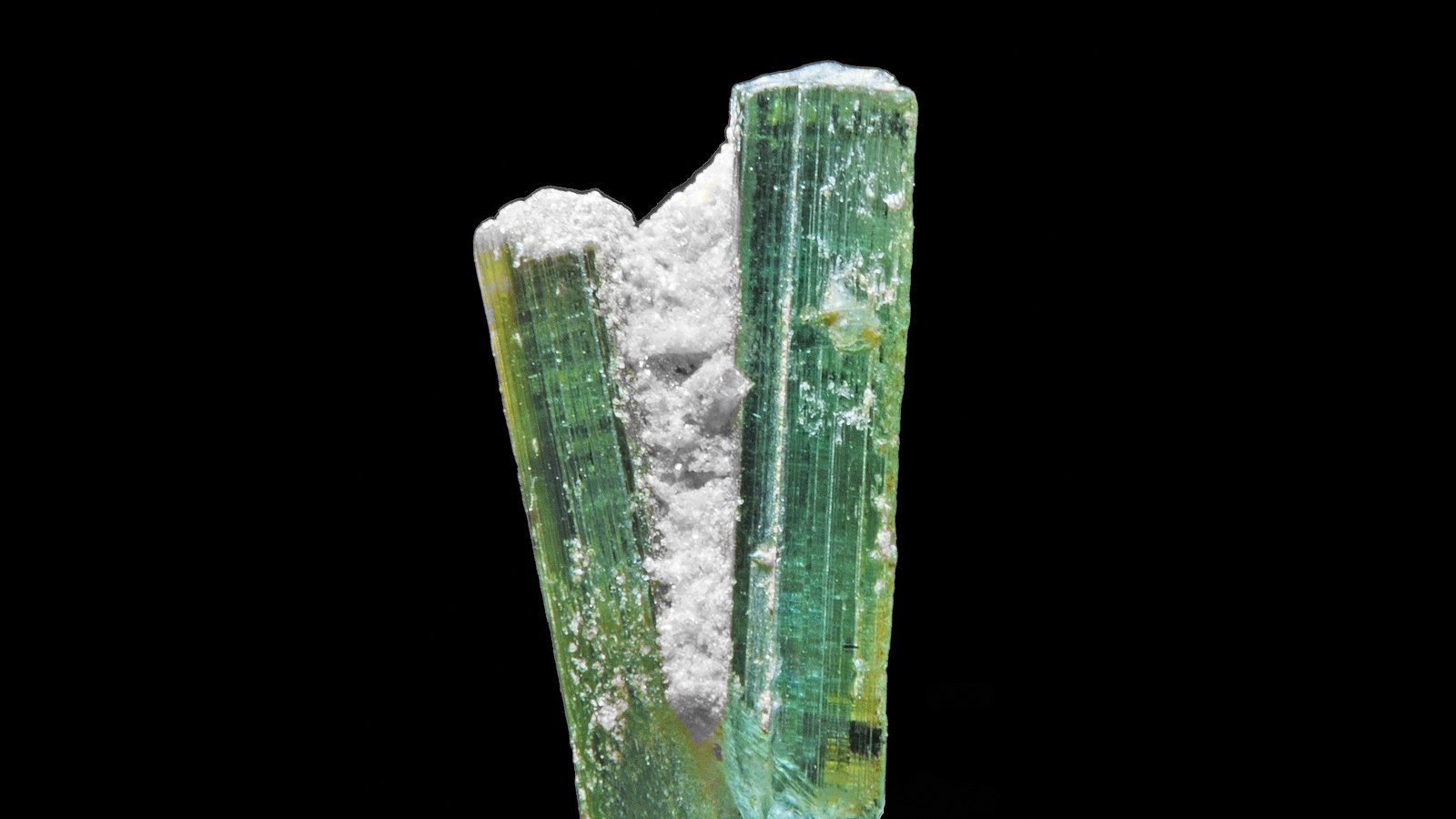
GIA and Gübelin confirm Ethiopia as a new source of Paraíba tourmaline
On 27 August, GIA and the Gübelin Gem Lab jointly confirmed that copper-bearing tourmaline from a new deposit near Abuloo, in Ethiopia’s Oromia region, meets the accepted definition of Paraíba tourmaline. GIA says it can already state Ethiopia as the origin on its reports. How they compare with Brazil’s finest remains an open question.

A rush that began in the spring
The Gübelin Gem Lab says it first saw the material in early May 2026, when several Paraíba tourmalines submitted for testing showed a chemistry that matched none of its reference data from Brazil, Mozambique or Nigeria. In Addis Ababa, the gemmologist Haimanot Sisay first heard of “Paraíba” from a contact in Shakiso on 25 May.
In a field report published in July by the Italian journal IGR, Sisay places the workings about 2 km east of the village of Abuloo, some 50 km north-east of Shakiso. Miners dig secondary deposits down to about 6 m; he counted more than 3,000 people on site and describes a tense security situation. He also relays trade talk in Addis Ababa that an early parcel sold for more than 200 million birr, over US$1 million; that figure has not been independently confirmed.
On 18 June the Swiss laboratory SSEF reported credible trade accounts of a new source and said that several gems submitted to it were hard, sometimes impossible, to assign to an origin, as their trace elements overlapped with known material, mainly Brazilian.
What the laboratories found
The joint statement of 27 August brings together two separate investigations. Gübelin assembled about 300 rough and faceted gems, some gathered in Ethiopia; GIA examined parcels from early June and in July received more than 100 samples from the Ferreira Group. Both conclude that the deposit yields tourmaline coloured predominantly by copper, within the definition of Paraíba tourmaline.
The colours run from blue to bluish green, with violet, purple and colourless in some rough, and many gems are strongly colour-zoned. In Idar-Oberstein, the DSEF German Gem Lab, which received its first lot from Abuloo on 24 June, found in about 50 samples the copper absorption bands near 700 and 900 nm that are typical of Paraíba tourmaline, and in some gems an extra band near 520 nm caused by manganese. Other gems in the same parcels were copper-free or iron-dominated; it does not classify these as Paraíba.
Chemistry also betrays the new origin. Both laboratories report elevated vanadium (above 60 ppm), lead (170 to 6,000 ppm) and gallium (280 to 900 ppm), all measurable with a good ED-XRF instrument. “The Ethiopian samples are readily distinguishable from all other origins of paraíba tourmaline, without the need for research-grade analytical methods such as LA-ICP-MS,” said Peter Tollan, head of research and development at Gübelin.
A name for a colour, not a place
The name comes from the Brazilian state of Paraíba, where copper-bearing tourmaline was found at the Batalha mine, near São José da Batalha, in the late 1980s. Similar material followed from Rio Grande do Norte in the 1990s, then from Nigeria from 2001 and Mozambique from the mid-2000s, according to GIA research published in 2006.
The Laboratory Manual Harmonisation Committee (LMHC) defines “Paraíba tourmaline” by colour and chemistry: a blue, blue-green to green-blue, green or yellowish-green tourmaline of medium to high saturation, coloured mainly by copper and manganese, whatever its geographic origin. A tourmaline whose colour is dominated by iron, or which holds only traces of copper, does not qualify.
Brazil, Africa, and now Ethiopia
Origin weighs on price. Writing in Gems & Gemology in 2019, GIA researchers noted that Brazilian Paraíba tourmalines are typically more highly valued than African ones, and that the finest Brazilian gems often show more intense colour, although the colour ranges of the two overlap. They measured an average of about 11,400 ppm of copper in Brazilian samples, against less than 2,000 ppm in African material. Mozambique has since become a major supplier, at times of very large gems, Rapaport noted in June.
For Ethiopia the published data are still partial. The DSEF found on average more calcium, iron, gallium and lead than in Brazilian material, while noting that some crystals recall those of the Batalha mine. Copper averages for Ethiopia have not yet been published; the full papers GIA and Gübelin have announced for Gems & Gemology should fill that gap. No reliable public price data exist so far.
Our view
In our view, the laboratories have settled the question of the name: gems from Abuloo that meet the criteria are Paraíba tourmaline in the full sense, as those from Mozambique and Nigeria are. Whether they can stand beside the finest Brazilian gems is another question, one of colour, size and supply, and the published evidence does not answer it yet. Iron-coloured look-alikes travel in the same parcels, and only spectroscopy tells them apart. A buyer today should ask for a report from a laboratory holding Ethiopian reference material, stating variety, origin and any heating, and judge the gem by its colour, not its name.
David Nataf is a GIA Graduate Gemologist (GG) and gem dealer. The gems pictured are not for sale by NANA.
- GIA and Gübelin Gem Lab, “GIA and Gübelin Gem Lab Confirm New Source of Copper-Bearing Tourmaline from Ethiopia”, joint press release. gubelingemlab.com, 27 August 2026.
- JCK News Desk, “GIA, Gübelin Confirm Ethiopia as New Source of Paraiba Tourmaline”, JCK. www.jckonline.com, 27 August 2026.
- SSEF, “New source of Paraiba tourmalines reportedly discovered in Ethiopia”. www.ssef.ch, 18 June 2026.
- Suzanne Watkin, “New Paraiba Tourmalines May Originate From Deposit in Ethiopia”, Rapaport. rapaport.com, 21 June 2026.
- DSEF German Gem Lab, “Cuprian tourmalines from Ethiopia”, DGemG research blog. blog.dgemg.com, 1 July 2026.
- Haimanot Sisay, “Field report to Paraíba tourmaline rush near Abuloo, Ethiopia”, IGR, Rivista Italiana di Gemmologia. www.rivistaitalianadigemmologia.com, 22 July 2026 (report dated 4 July 2026).
- LMHC, Information Sheet 6, “Paraiba tourmaline”, version 8 (PDF). www.lmhc-gemmology.org, February 2023.
- Y. Katsurada, Z. Sun, C.M. Breeding, B.L. Dutrow, “Geographic Origin Determination of Paraíba Tourmaline”, Gems & Gemology, vol. 55, no. 4. www.gia.edu, Winter 2019.
- A. Abduriyim et al., “‘Paraíba’-Type Copper-Bearing Tourmaline from Brazil, Nigeria, and Mozambique: Chemical Fingerprinting by LA-ICP-MS”, Gems & Gemology, vol. 42, no. 1. www.gia.edu, Spring 2006.
Spotted an error? Corrections policy · Editorial policy