Catégorie : Jewellery market

  • Interview: Israel Diamond Exchange president Nissim Zuaretz calls for a diamond free-trade zone

    Interview: Israel Diamond Exchange president Nissim Zuaretz calls for a diamond free-trade zone

    Jewellery market · Interview

    Interview: Israel Diamond Exchange president Nissim Zuaretz calls for a diamond free-trade zone

    Israel’s diamond bourse will keep its biggest traders only if the state creates a diamond free-trade zone, its president Nissim Zuaretz told us in Ramat Gan on 11 February 2026. He also called laboratory-grown diamonds “not diamond” and said Israeli traders follow US sanctions on Russian goods. In July he resigned before the end of his term; he stays in office until elections expected in November or December.

    By , GIA Graduate Gemologist (GG) · Published · Updated

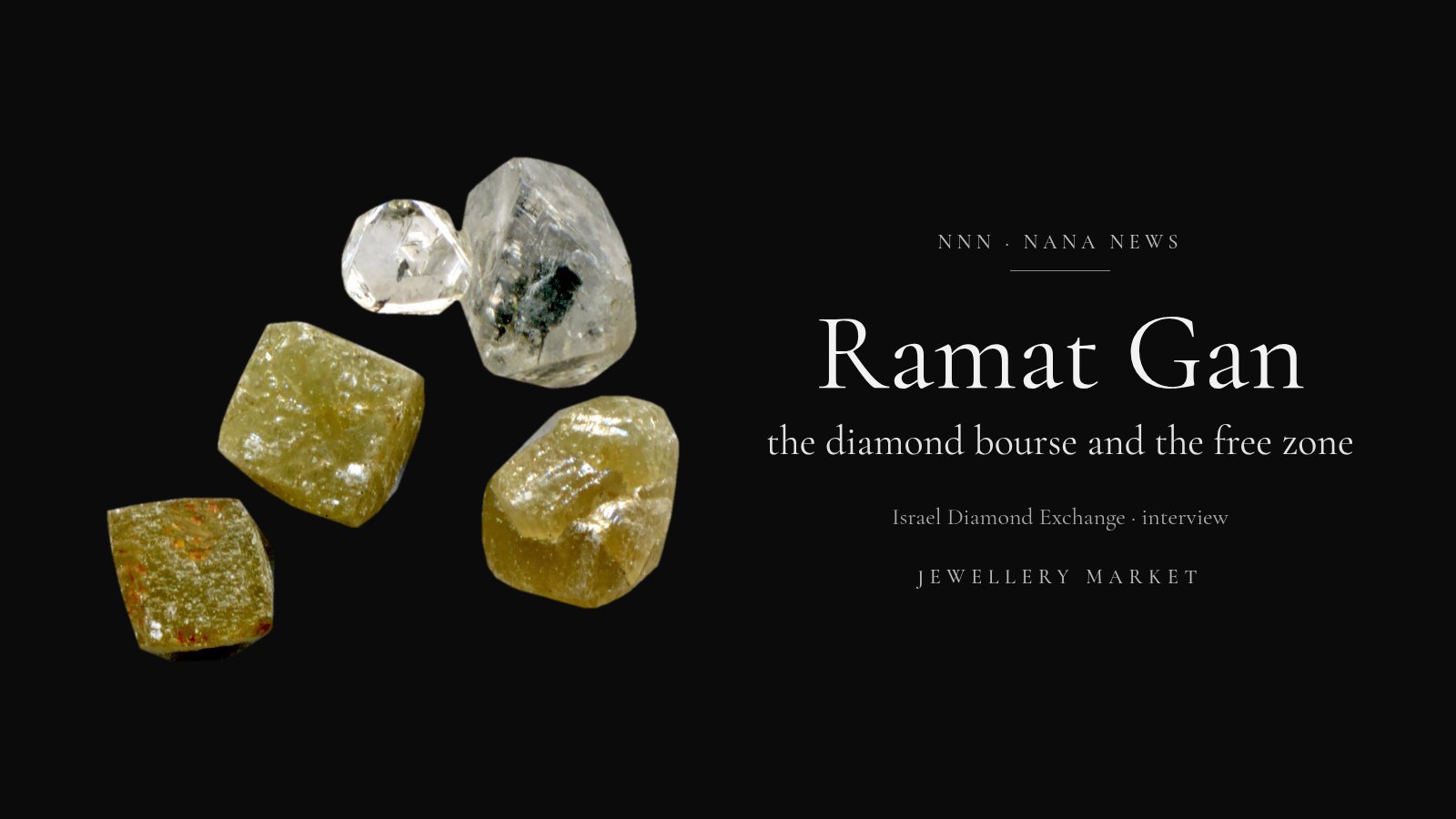
    Black-and-white illustration in which only five rough diamonds from Africa, cubic and octahedral crystals, keep their colour, beside the words Ramat Gan and diamond bourse
    Illustration by NaNa News. Rough diamonds from Africa (three yellowish-grey cubes and two octahedra; the crystal at lower left is about 2.5 mm across), photo James St. John, CC BY 2.0, Wikimedia Commons; modified (cut out, black and white, selective colour). These diamonds have no connection with the Ramat Gan bourse.

    Twenty years later, in Ramat Gan

    We met Nissim Zuaretz at the Israel Diamond Exchange (IDE) in Ramat Gan on 11 February 2026. I had first walked its trading floors twenty years earlier. Zuaretz was elected unopposed in May 2024 for a three-year term, becoming the exchange’s 11th president (Rapaport). In 2007 he co-founded DN Diamonds, a large-diamond specialist headquartered at the bourse, with offices in Dubai, New York and Hong Kong; the company has won Israel’s Outstanding Exporter award three times (IDE, Globes).

    From Achuzat Bayit Street to Ramat Gan

    The Israeli trade started in Tel Aviv. According to the exchange’s own chronology, the Israel Diamond Club was founded there on 8 October 1937 and moved in December 1947 to 3 Achuzat Bayit Street. The story told in the trade is that Moshe Schnitzer, who played an active part in unifying the trade’s organisations in 1947 and presided over the exchange from 1967 to 1993, first asked Tel Aviv’s mayor for room to grow, and that the mayor turned him down because the country had no diamond deposits. What is documented is that, after difficulties with the Tel Aviv municipality, Ramat Gan’s mayor Abraham Krinitzi offered his city, then largely undeveloped; the land contract was signed on 14 November 1961 (Wikipedia). The first tower, Shimshon, opened on 24 October 1968, the Diamond Tower in 1993 and a rough-trading hall in 1998.

    The industry was built by Holocaust survivors and Jewish immigrants from Belgium and the Netherlands, who brought their cutting and polishing skills. For decades diamonds were the only export in which Israel was more than a marginal supplier: in 1986 they earned nearly US$1.7 billion, about 24% of the country’s exports, according to the US Library of Congress country study. In 2024 they still accounted for about 8% (Rapaport).

    Then the model changed. The polishing of smaller diamonds moved to lower-cost centres, above all India, where production is cheaper, as Zuaretz told Globes in 2025. In December 2016 the industry signed a new agreement with the Tax Authority: diamantaires, who had paid tax on turnover even in loss-making years, would from then on be taxed on profits (Gems2Jewellery). And Dubai became the leading hub: the DMCC reports record diamond trade of US$41.7 billion through the emirate in 2025. Zuaretz sees where Ramat Gan still has the edge: “We are the specialists of big stones. For expensive ones you need a professional cutter, and the salary for that lifetime experience will never be replaced.”

    Lab-grown: “it is not diamond”

    On laboratory-grown diamonds, Zuaretz does not mince his words. “It is not coming from diamond, it is not diamond, it is nothing. Real diamond comes from the earth where it stays millions of years,” he told us. “This horrible CVD lab-grown thing is sold for 70 dollars per carat.” He compares them with Swarovski crystal: attractive, but without geological rarity or emotional weight. He cites offers in which a restaurant bill costs more than a lab-grown engagement ring, or in which the gold of the mounting is worth more than the gem. These are his opinions and figures; we have not verified the price he quotes.

    Regulation is moving towards a clearer distinction. India’s standard IS 19469:2025 states that the word “diamond”, used without qualification, may refer only to a natural diamond, and bans terms such as “lab diamond” (Bureau of Indian Standards). In Antwerp, the HRD laboratory stopped grading loose laboratory-grown diamonds on 1 January 2026, while still issuing reports for jewellery set with them (AWDC, JCK). Zuaretz expects the rest of the market to follow: “Soon everywhere, the market will not call lab-grown ‘diamond’ anymore. It is like Swarovski.”

    Sanctions, Africa and 25 centuries of trade

    Sanctions on Russia have redrawn supply routes. The European Union, acting with its G7 partners, has banned imports of Russian diamonds since 1 January 2024, then Russian diamonds processed in third countries: from 1 March 2024 for diamonds of one carat and above, and from 1 September 2024 from 0.5 carat (European Commission).

    Zuaretz says Israeli traders stick to the American line. “America says we can’t deal with Russia, the banks will not send the money. We respect exactly the words and laws of America,” he said. “It’s a pity but we don’t deal with Russian goods until something changes.” For him, the future lies further south: “Africa is the future, controlling the market because Russia is out… No sanctions for Africa as long as Kimberley Process.”

    The bourse has also lived through the war. On 19 June 2025 an Iranian missile struck the vicinity of the Diamond Tower complex in Ramat Gan, shattering windows in several buildings and starting fires, The Media Line reported. “Iranian missiles hit close to the Borsa but not the Borsa,” Zuaretz said. He sees the trade as older than today’s conflicts, recalling that Iranians call the diamond almas and that the Hebrew word yahalom appears in the Book of Ezekiel. “We diamantaires know each other and trade together since more than 25 centuries: Persians, Jews, Arabs, Azerbaijan, Bukhari.”

    Machines and the diamantaire’s eye

    “Every machine is coming from Israel and then they copy us,” Zuaretz says of the trade’s equipment, a claim we could not measure. He cites the colorimeters made by Zvi Yehuda, which he says assess colour in seconds; DiamondWorld describes one model that predicts the colour of rough diamonds from D to K. In our experience as GIA-trained gemologists, even GIA combines instruments with the judgement of its graders.

    Artificial intelligence, he says, can grade a polished diamond but cannot predict what a rough crystal will yield, for instance whether it will end up VS1 or SI2 in clarity. “No two stones the same… This takes a lifetime of a diamantaire.” Recalling how the invention of the French engineer Roland Moreno’s chip came to be forgotten, he warns that know-how can be lost, and draws one conclusion: “The only way is a free zone.” Zuaretz also told us that he invests in Kimby.io, a platform offering accredited investors fractional ownership of high-value natural diamonds. We mention it for transparency about his interests; it is not an investment recommendation.

    The free-zone demand

    This is the heart of his message. “The government needs to help us with the free zone. Every government helps their diamond exchange: India with banking, Dubai with free tax. Israel has zero help,” Zuaretz said. “If no help, the 10 biggest traders will leave.”

    The demand is not new. In May 2025 he told Globes that a free-trade zone was “a matter of life and death for the industry”. In September 2025, during a visit to the bourse, Finance Minister Bezalel Smotrich said he would include in the 2026 budget a proposal to make Israel a free-trade zone for diamonds, a project spearheaded by Zuaretz (Rapaport). The model is Dubai: exemption from import and export duties and currency restrictions, and from personal and corporate taxes. At the time of writing, we have found no public confirmation that the zone has been adopted.

    Since our interview, the situation has moved on. On 26 July 2026 Rapaport reported that Zuaretz had resigned before the end of his term; he remains in office until the election of a successor, scheduled for November or December. According to the Ministry of Economy and Industry, quoted in the same article, Israel’s polished diamond exports fell 22% year on year to US$625.7 million in the first half of 2026. The IDE has also rejoined the World Federation of Diamond Bourses after a year’s absence.

    Our view

    In our view, Ramat Gan still holds what is hardest to relocate: the eye and experience needed to buy a large rough diamond and cut it well, and a trade that says it applies sanctions to the letter. But these strengths now depend on decisions taken outside the bourse. Whether the free zone materialises, and who leads the exchange after the elections, will largely decide whether the biggest traders stay. We will follow both questions.

    David Nataf is a GIA Graduate Gemologist (GG) and gem dealer. The interview took place at the Israel Diamond Exchange in Ramat Gan on 11 February 2026.

    Sources
    1. Rapaport, “Israel Diamond Exchange Names Nissim Zuaretz as President”. rapaport.com, 21 May 2024.
    2. Israel Diamond Exchange, “Nissim Zuaretz”, management page. en.isde.co.il, accessed 26 September 2026.
    3. Dean Shmuel Elmas, Globes, “Restoring the luster to Israel’s diamond industry”. en.globes.co.il, 22 May 2025.
    4. Israel Diamond Exchange, “Important Dates”. en.isde.co.il, accessed 26 September 2026.
    5. Israel Diamond Exchange, “Moshe Schnitzer”. en.isde.co.il, accessed 26 September 2026.
    6. Wikipedia, “Diamond Exchange District”. en.wikipedia.org, accessed 26 September 2026.
    7. Library of Congress, Israel: A Country Study, “Diamonds”. countrystudies.us, 1988.
    8. Gems2Jewellery, “IDE Reaches New Agreement with Tax Authority”. gems2jewellery.com, 20 December 2016.
    9. DMCC, “DMCC Announces Record USD 41.7 billion in Diamond Trade Through Dubai in 2025”, press release. dmcc.ae, 13 July 2026.
    10. Bureau of Indian Standards, Standard of the Week: IS 19469:2025 (PDF). www.bis.gov.in, February 2026.
    11. AWDC, “World First: Antwerp Diamond Lab HRD Becomes First in the World to End Quality Certification for Loose Synthetic Diamonds”. www.awdc.be, accessed 26 September 2026.
    12. JCK, “HRD Antwerp to Stop Grading Lab-Grown Diamonds”. www.jckonline.com, 23 June 2025.
    13. European Commission, “Restrictions on diamonds: frequently asked questions” (PDF). finance.ec.europa.eu, as of 17 December 2025.
    14. Steven Ganot, The Media Line, “Iran Strikes Israel’s Soroka Hospital, Diamond Exchange; Netanyahu Vows Revenge”. themedialine.org, 19 June 2025.
    15. DiamondWorld, “OGI and Zvi Yehuda launch Colorimeter model-F”. www.diamondworld.net, accessed 26 September 2026.
    16. Leah Meirovich, Rapaport, “Israel Finance Minister Wants Country to Be Free-Trade Zone for Diamonds”. rapaport.com, 25 September 2025.
    17. Joshua Freedman, Rapaport, “Israel Diamond Exchange President Resigns”. rapaport.com, 26 July 2026.

    Spotted an error? Corrections policy · Editorial policy
  • Hong Kong’s September jewellery fair drew 57,632 buyers, its highest turnout since the pandemic

    Hong Kong’s September jewellery fair drew 57,632 buyers, its highest turnout since the pandemic

    Jewellery market

    Hong Kong’s September jewellery fair drew 57,632 buyers, its highest turnout since the pandemic

    Jewellery & Gem WORLD Hong Kong, held from 14 to 20 September 2026 across two venues, welcomed 57,632 unique buyers from 149 countries and regions, up 4.5% on 2025 and its best attendance since the pandemic, organiser Informa Markets said after the fair closed. Exhibitors reported steady orders for fancy-shaped diamonds, strong interest in spinel and Paraíba tourmaline, and buyers looking for stock they can sell quickly despite high gold prices.

    By , GIA Graduate Gemologist (GG) · Published · Updated

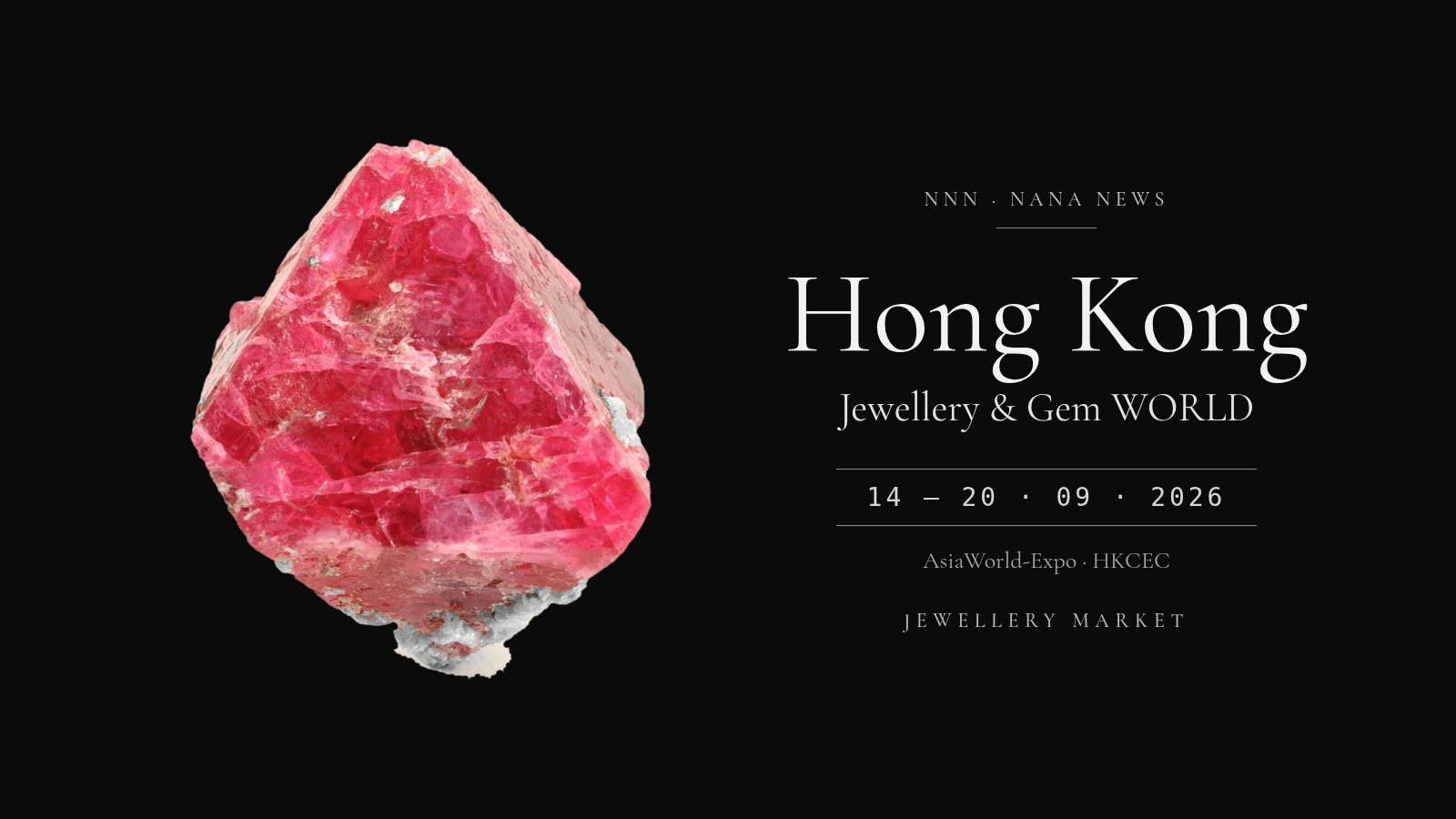
    Black-and-white illustration in which only a hot pink spinel crystal keeps its original colour, beside the words Hong Kong, Jewellery & Gem WORLD and the dates 14 to 20 September 2026
    Illustration by NaNa News. Spinel crystal from Mahenge, Tanzania: photo Rob Lavinsky, iRocks.com, CC BY-SA 3.0, Wikimedia Commons; modified (cut out, black and white, only the gem keeps its original colour), shared under the same licence. The specimen has no connection with the fair.

    Two venues, one week

    JGW, the fair long known as the September Hong Kong Jewellery & Gem Fair, is split in two. From 14 to 18 September, three fairs at AsiaWorld-Expo, near the airport, covered precious materials: Gemstones, Diamonds & Fine Gems, and Pearls+. From 16 to 20 September, three more at the Hong Kong Convention and Exhibition Centre (HKCEC) in Wan Chai showed finished jewellery, packaging, tools and technology, according to the fair’s website. When the 2025 edition closed, Informa had announced 15 to 21 September for 2026 (JNA, October 2025); the dates were then moved back to what the organiser calls the fair’s original schedule (JGW).

    A post-pandemic high, not an all-time record

    In its post-show statement, Informa Markets reported 57,632 unique buyers, “shattering post-pandemic records”, from 149 countries and regions, and around 3,000 exhibitors from 46 countries and regions (JNA, Gem Spectrum). A year earlier, the fair drew 55,176 buyers from 141 countries and regions and more than 3,000 exhibitors from 44 (JNA).

    The organiser does not claim an all-time record, and older figures show why. The 2016 edition reported 55,768 unique buyers and 3,615 exhibitors (UBM Asia release); the 2018 edition 54,142 unique visitors and 3,730 exhibitors from 54 countries and regions, its highest exhibitor count at the time (UBM Asia release). For 2019 we found no final figure: Informa said visitor turnout was down, with the biggest drop among mainland Chinese buyers, as the fair coincided with the Hong Kong protests and the US-China trade war (Informa, 22 September 2019; South China Morning Post). The 2026 total is therefore above the published 2016 and 2018 figures, with fewer exhibitors: around 3,000, against 3,615 and 3,730.

    Who came

    Attendance split roughly into thirds between Hong Kong, mainland China and international buyers. Growth came from North America (+24.2%), Europe (+13.4%), Central Asia (+42.2%) and mainland China (+4.5%), where Guangdong, Shanghai and Beijing supplied most visitors and Shaanxi, Jilin, Hebei and Hunan grew fastest (JNA). “The uptick in North American buyers signals a new normal,” said Celine Lau, director of Jewellery Fairs at Informa. Allen Xiang, its general manager for Jewellery, said suppliers were meeting customers “they have not seen in five or six years”.

    The picture shifted during the week. On 19 September, the fair’s show daily quoted Lau as saying that, over the first four days, buyers from Italy, Germany and Austria were each up by more than 20% and Russian visitors by more than 30%, while numbers from India, the Philippines and mainland China had declined (JNA Show Daily). The final statement reports mainland China up 4.5%. The organiser published no figure for the Middle East, but a Hong Kong manufacturer told JNA it saw more Middle Eastern clients and many buyers from Africa, and Bahraini brands were at the fair sourcing coloured stones and fancy-colour diamonds (JNA, JNA Show Daily).

    Diamonds: fancy shapes and colours move, top whites wait

    At AsiaWorld-Expo, dealers described a steady recovery. Buyers mainly ordered 2- to 4-carat pears and ovals in E to G colour, VS and good SI clarity, one Hong Kong dealer told JNA; another said stones “between 20 pointers and 2 carats are selling” while top-quality whites “may take some time to recover”. A third reported strong demand for yellow, pink and blue fancy colours, slow business in D to F whites of 10 carats and up, and steady sales of 2- to 3-carat VS and SI stones at about US$15,000 to US$30,000 each (JNA). A natural-diamond exhibitor said sentiment had improved over the past three to four months (JNA Show Daily).

    That optimism sits alongside soft prices. The IDEX price report of 3 September found decreases outnumbering increases, with broader weakness in rounds from 0.70 to 1.99 carats. The fair lists laboratory-grown diamonds and gemstones among its product categories (JGW), but the organiser’s statement gives no figures for them and we found no sourced report on how they traded at the show.

    Coloured gems and pearls

    In coloured stones, “buyers were on the lookout for spinel and Paraíba tourmaline,” a Dubai-based dealer told JNA; the few mainland Chinese buyers he met asked for rubies and Paraíba. A Japan-based dealer said prices of Brazilian Paraíba were stable, red and hot pink spinel remained best sellers, and Chinese and Russian buyers were actively sourcing as prices kept strengthening (JNA). At the Pearls+ halls, Japanese exhibitors showed white and golden South Sea, Tahitian and Akoya pearls (JNA Show Daily), and a Malaysian retail chain came looking for pearls and coloured stones for bespoke orders (JNA). A first Mandarin-language master class for content creators, run with IGI, AIGS, SSEF and Gübelin, covered identification, origin and treatment (JNA).

    Gold: lighter pieces and other metals

    Gold weighed on the finished-jewellery halls. Lau cited “geopolitical tensions, tariff pressures and high gold prices” (JNA). Spot gold was trading at US$4,378.97 an ounce on the morning of 18 September (GMT) (Reuters), below its record of US$5,589.38 set on 28 January 2026 (CBS News) but far above earlier years. A Philippine retailer said manufacturers were offering gold jewellery that keeps a bigger look at lighter weight, and a Malaysian chain planned to order 22-karat jewellery from Turkish and Italian suppliers and 24-karat “hard pure gold” from Chinese makers (JNA). One gem jeweller presented titanium necklaces because “metal prices have gone up significantly” (JNA Show Daily).

    What it means for buyers

    • Attendance is not sales. The figures count people, not transactions, as CIJ points out, and Informa published no sales data. Read “record” as “more buyers than at any edition since the pandemic began”.
    • White diamonds: room to negotiate. With asking prices of rounds under pressure and dealers describing top whites as slow, retail buyers of classic white diamonds are in a comparatively strong position. Pears and ovals of 2 to 4 carats and fancy colours are in demand in the trade, so expect firmer prices there.
    • Natural or laboratory-grown: ask for a report. Both are sold at the fair and look the same to the eye. For any significant stone, ask for an independent laboratory report that states whether it is natural or laboratory-grown, and check its number on the laboratory’s own website.
    • Spinel and Paraíba: firm prices. Dealers describe strong demand and rising prices for these stones. For both, origin and treatment affect value: ask for a report from a recognised laboratory stating them, and for Paraíba, one that confirms the copper content behind the name.
    • Gold jewellery: check weight and fineness. High gold prices push makers towards lighter, hollower pieces, lower karats and alternative metals such as titanium. Compare the stated gold weight and the hallmark or karat stamp, not just the look.
    • Timing. Much of what was ordered in Hong Kong is year-end stock: exhibitors linked the busy week to restocking before Christmas, so new pieces reach shop windows from the fourth quarter.

    Our view

    In our view, the clearest signal from this edition is less the headline total than its mix: buyers from the United States and Europe returning after years away, and a sharp split between categories that sell, fancy-shaped diamonds, fancy colours, spinel and Paraíba, and those that wait, such as large top-colour whites. The figures come from the organiser; the trends come from exhibitors quoted in the trade press, including JNA, which is published by Informa Markets Jewellery, the organiser itself.

    David Nataf is a GIA Graduate Gemologist (GG) and gem dealer. This article is based on the organiser’s figures and on trade press reports.

    Sources
    1. JNA, “JGW September shatters expectations with 4.5% attendance jump” (Informa Markets post-show figures). news.jewellerynet.com, 22 September 2026.
    2. Gem Spectrum, “Post-show Report (Hong Kong September show 2026): JGW September Shatters Expectations with 4.5% Attendance Jump”. gem-spectrum.com, 21 September 2026.
    3. B. Sto. Domingo, S. Kwok, O. Quiniquini, JNA, “Robust demand at JGW September ahead of holiday season”. news.jewellerynet.com, 24 September 2026.
    4. JNA Show Daily, “Positive momentum at JGW September 2026”. news.jewellerynet.com, 19 September 2026.
    5. JNA Show Daily, “Bevy of activity at leading B2B marketplace”. news.jewellerynet.com, 18 September 2026.
    6. JNA Show Daily, “Sourcing the perfect pearls”. news.jewellerynet.com, 14 September 2026.
    7. CIJ, “JGW Hong Kong: more buyers, sharper sourcing strategies”. www.cijintl.com, September 2026.
    8. JGW September, official website, home page. jgw.exhibitions.jewellerynet.com, accessed 26 September 2026.
    9. JGW September, official website, “Introduction”. jgw.exhibitions.jewellerynet.com, accessed 26 September 2026.
    10. JNA, “JGW defies market headwinds with 10% rise in buyer traffic”. news.jewellerynet.com, 8 October 2025.
    11. UBM Asia, “September Fair brings the best of the jewellery trade to the world”, PR Newswire. www.prnewswire.com, 10 December 2018.
    12. UBM Asia release, “More Than 55,700 Buyers Attended The September Hong Kong Jewellery & Gem Fair”, INSTORE. instoremag.com, 19 October 2016.
    13. Informa Markets, “September Fair delivers better-than-expected results as it attracts serious buyers”. e.jewellerynet.com, 22 September 2019.
    14. Eric Ng, South China Morning Post, “Hong Kong jewellery fair – the world’s largest – robbed of sparkle by protests, US-China trade war, reports drop in turnout”. www.scmp.com, 25 September 2019.
    15. IDEX Online, “IDEX Price Report for September: Prices Remain Under Pressure”. www.idexonline.com, 3 September 2026.
    16. Reuters (via Kitco), “Gold scales one-week high as crude prices ease”. www.kitco.com, 18 September 2026.
    17. Angelica Leicht, CBS News, “What is the highest gold price in history?” www.cbsnews.com, 24 February 2026.
    18. JNA, “About JNA” (published by Informa Markets Jewellery). news.jewellerynet.com, accessed 26 September 2026.

    Spotted an error? Corrections policy · Editorial policy

  • After a hammer raid in Lyon, how laser-inscribed report numbers help trace stolen diamonds

    After a hammer raid in Lyon, how laser-inscribed report numbers help trace stolen diamonds

    Jewellery market

    After a hammer raid in Lyon, how laser-inscribed report numbers help trace stolen diamonds

    Burglars smashed the front of a jewellery shop in central Lyon before dawn on 23 September and fled with pieces from its displays, most or all of them replicas according to the brand and the local press. The raid is a reminder of what identifies a real diamond once it has left the shop: the report number laser-inscribed on its girdle, and the limits of that mark.

    By , GIA Graduate Gemologist (GG) · Published · Updated

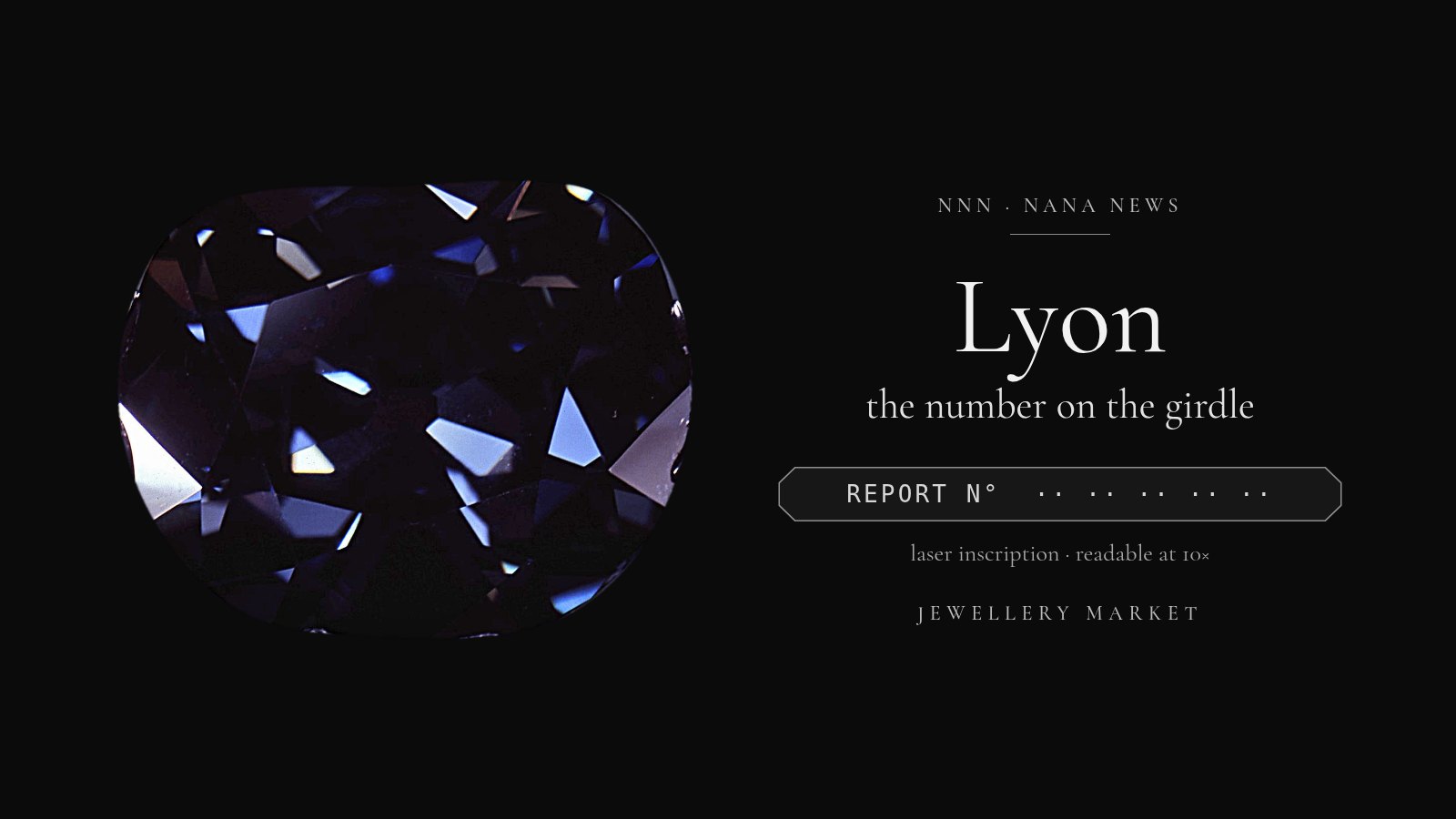
    Black-and-white illustration in which only a real blue diamond, the Hope, keeps its colour, beside the word Lyon and a girdle band bearing a fictitious, unnumbered laser inscription
    Illustration by NaNa News. Blue diamond: the Hope (45.52 ct), photo from 1974, Smithsonian Institution Archives (author unknown), public domain, Wikimedia Commons; modified (cut out, black and white, selective colour). The Hope has no connection with the Lyon case; the inscription shown is fictitious and no real report number is reproduced.

    What happened

    At about 3:30 a.m. on Wednesday 23 September, hooded people broke the shop front of the Edenly jewellery shop, at the corner of rue des Archers and place des Célestins in Lyon’s 2nd arrondissement, with hammers, took pieces from the displays as the alarm rang and fled in a white Renault Clio, according to Le Progrès, BFM Lyon and Lyon Capitale. Most reports mention three people; BFM Lyon and TF1 counted four, including a driver. The car had been reported stolen, TF1 said.

    The Lyon prosecutor’s office opened an investigation, led by the Rhône territorial crime division, and TF1 reported on 24 September that it concerns organised theft and criminal conspiracy. No arrest had been reported at the time of writing.

    A loot of replicas

    On 25 September Le Progrès reported that all the pieces taken were display replicas, as a notice in the window stated. Speaking to TF1, the brand’s founder described about 300 pieces, “a large majority” of them demonstration replicas, and a loss of several thousand euros rather than the hundreds of thousands real pieces would have represented. A saleswoman told France 2 that real gold and diamond jewellery is made to order only. The shop, opened this summer, was due to reopen on 25 September (Lyon Mag).

    According to TF1, it was the second jewellery shop burgled in Lyon in two weeks. The judicial police told the channel that thefts in the precious metals and watch sector are rising notably, partly because of a very high gold price, mainly on the outer fringes of the Lyon and Besançon areas (our translation). On 16 September, Le Progrès reported an armed robbery at a Vieux-Lyon shop that buys and resells antique jewellery, with a loot estimated at €138,000. Gold “can very easily be melted”, Thibaut Fontaine, head of France’s central office against organised crime, told franceinfo in November 2025, which makes it hard to trace (our translation).

    The number on the girdle

    A diamond can carry an identity that gold cannot. GIA laser-inscribes a diamond’s report number on its girdle, the narrow edge around the widest part of the gem; the inscription is invisible to the naked eye but can be read under 10× magnification. IGI and HRD Antwerp offer the same service, which IGI says allows fast identification and verification. The technique goes back to a patent filed in 1980 by Lazare Kaplan & Sons, granted in 1983, which already cited identifying a diamond “if stolen or lost”.

    The number is the key to the laboratory’s database. Entered on GIA Report Check, IGI’s report verification or HRD’s online portal, it returns the details of the original report. It can also help after a theft. In 2024 GIA said it had helped recover two diamonds of more than four carats stolen from a home in Colorado: when an uninvolved dealer sent them for grading, GIA identified them as matching those reported stolen. “GIA often receives requests from law enforcement to help them recover GIA-graded diamonds that are reported lost or stolen,” said Christina Yates, GIA associate general counsel. Gemprint also accepts reports of stolen diamonds registered with it. We found no public registry of stolen diamonds searchable by report number.

    The limits of the mark

    A girdle inscription sits on the surface. Researchers at the Swiss laboratory SSEF wrote in 2019 that such marks can be lost when a gem is recut, and may be completely erased by slight polishing. A number can also be forged: in a 2025 Lab Note, GIA described four diamonds submitted in Dubai with counterfeit GIA report numbers, and warned that a fraudulent inscription could be overlooked by simple visual examination.

    An inscription exists only if someone ordered it, so a diamond cut before the technique existed, or never sent to a laboratory, carries none. Coloured gems can be inscribed too, as SSEF has shown on a ruby, though its researchers noted that sub-surface marking was not yet a standard service for them. Without an inscription, a gem can only be matched to its report by its description, weight, measurements and photographs.

    Our view

    In our view, the lesson lies in the difference between metal and gems. Melted gold leaves no trail. A graded diamond does, but only if its owner kept the number, the mark survives and someone checks it when the gem resurfaces. We advise every owner of a graded diamond to keep the report number and a photograph of the inscription away from the jewellery box and, for a coloured gem, a detailed report with photographs and measurements.

    David Nataf is a GIA Graduate Gemologist (GG) and gem dealer.

    Sources
    1. Le Progrès, “Lyon. « J’ai rigolé sur le coup » : en pleine nuit, trois cambrioleurs ciblent maladroitement une bijouterie” (in French). www.leprogres.fr, 23 September 2026.
    2. BFM Lyon, “Une bijouterie cambriolée en pleine nuit à Lyon, les auteurs du vol en fuite” (in French). www.bfmtv.com, 23 September 2026.
    3. TF1 Info, “Attaque d’une bijouterie à coups de marteau à Lyon : les images impressionnantes des braqueurs avant leur fuite” (in French). www.tf1info.fr, 23 September 2026.
    4. franceinfo / France 2, “« Il n’y a pas de vrais bijoux » : des voleurs ont braqué une bijouterie au marteau avant de découvrir qu’ils étaient factices” (in French). www.franceinfo.fr, 23 September 2026.
    5. TF1 Info, “Bijouterie cambriolée à Lyon : les malfaiteurs ne savaient pas qu’ils étaient filmés… et qu’une autre surprise les attendait” (in French). www.tf1info.fr, 24 September 2026.
    6. Laurence Loison, Le Progrès, “Lyon. Ils cambriolent une bijouterie à coups de marteau : tous les bijoux dérobés sont factices” (in French). www.leprogres.fr, 25 September 2026.
    7. Vincent Guiraud, Lyon Capitale, “Braquage d’une bijouterie à Lyon : les bijoux dérobés étaient factices” (in French). www.lyoncapitale.fr, 25 September 2026.
    8. Lyon Mag, “Cambriolage d’une bijouterie à Lyon : les bijoux dérobés étaient factices, l’enseigne rouvre ses portes” (in French). www.lyonmag.com, 25 September 2026.
    9. Laurence Loison, Le Progrès, “Métropole de Lyon. « Je ne vous veux pas de mal, j’ai des dettes » : il séquestre deux salariés et braque une bijouterie du Vieux-Lyon” (in French). www.leprogres.fr, 16 September 2026.
    10. Yannick Falt, franceinfo, “« Le cours de l’or aiguise l’appétit des malfaiteurs », affirme le chef de l’Office central de lutte contre le crime organisé” (in French). www.franceinfo.fr, 6 November 2025.
    11. GIA, “What is a laser inscription and is it important?” www.gia.edu, accessed 26 September 2026.
    12. GIA, Report Check. www.gia.edu, accessed 26 September 2026.
    13. IGI, “IGI Laserscribe”. www.igi.org, accessed 26 September 2026.
    14. IGI, “Verify Your Report”. lookup.igi.org, accessed 26 September 2026.
    15. HRD Antwerp, FAQ. hrdantwerp.com, page dated 4 September 2026.
    16. US Patent 4,392,476, Lazare Kaplan & Sons, “Method and apparatus for placing identifying indicia on the surface of precious stones including diamonds”. www.freepatentsonline.com, filed 23 December 1980, published 12 July 1983.
    17. GIA, “GIA Helps Recover Diamonds in Colorado”, press release. www.gia.edu, 5 February 2024.
    18. Gemprint, “Report Lost / Stolen Diamond”. www.gemprint.com, accessed 26 September 2026.
    19. N. Chan, S. Pradhan, “HPHT-Processed Natural and Laboratory-Grown Diamonds with Counterfeit Inscriptions”, Gems & Gemology Lab Notes. www.gia.edu, Summer 2025.
    20. L.E. Cartier et al. (SSEF), “Laser Inscription and Marking of Gemstones”, InColor, issue 43 (PDF). www.ssef.ch, Summer 2019.

    Spotted an error? Corrections policy · Editorial policy